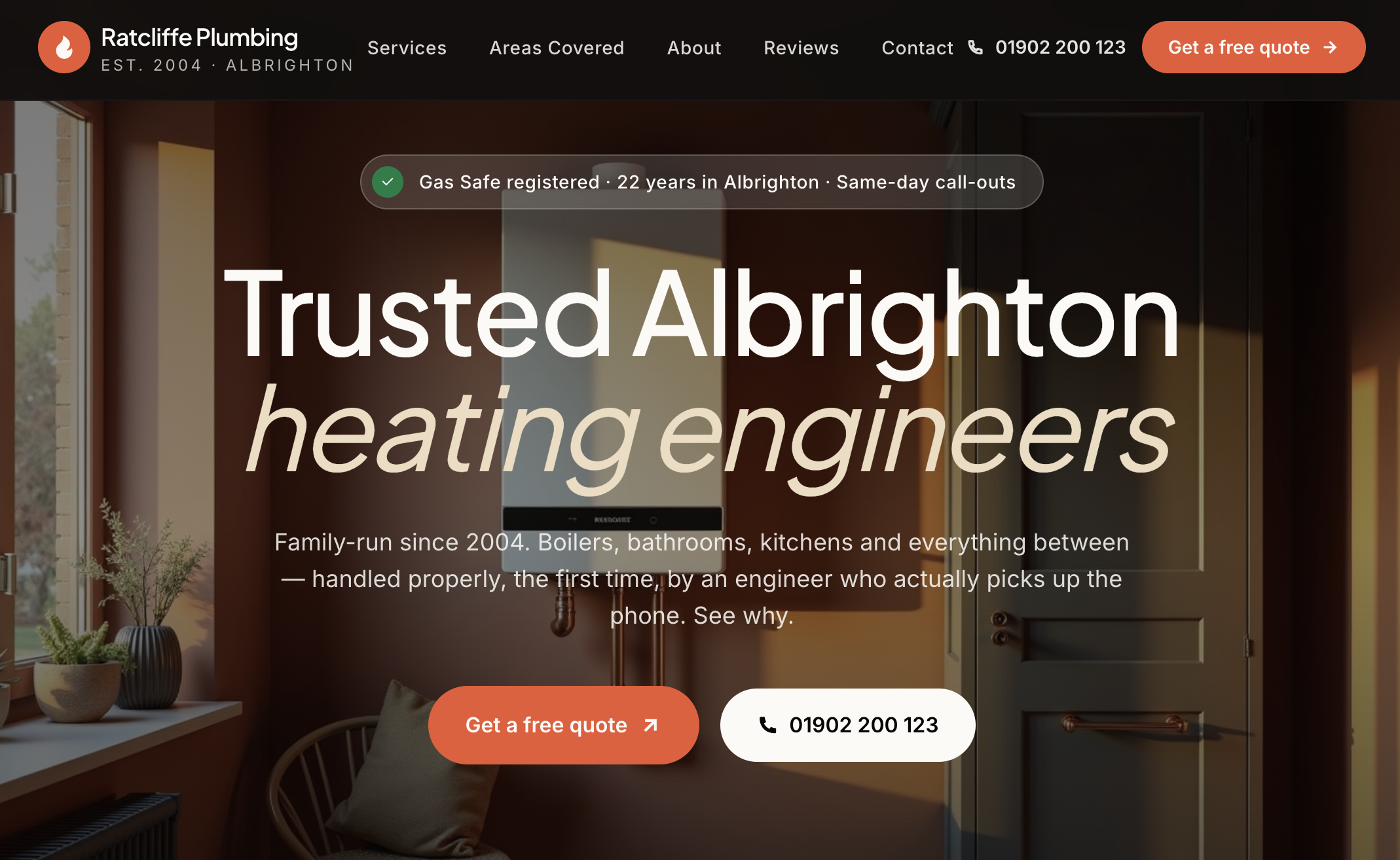
A lot of tradespeople still rely on word of mouth, Facebook pages and online directories to bring in work. Those channels can all help, but in 2026, having your own website is becoming less of an extra and more of a basic part of running a professional trade business.
Customers now expect to be able to search for a local tradesperson, check their work, read about their services and get in touch without having to dig through social media or rely on a third-party platform.
So, do trades need a website in 2026? For most businesses, the answer is yes.
A good website can help legitimise your business, generate more enquiries and give potential customers the confidence to choose you over someone else.
A website makes your business look established
One of the biggest benefits of a website for trades is credibility.
When a customer finds your business on Google, one of the first things they will often do is look for your website. They want to know that you are genuine, local and experienced.
A professional website gives you somewhere to clearly show:
- Who you are
- What services you offer
- Which areas you cover
- Examples of previous work
- Customer reviews
- Your contact details
- Any qualifications, memberships or guarantees
Without a website, some customers may question whether the business is still active or established. This is especially true when they are comparing several tradespeople for a larger or more expensive job.
A website does not need to be complicated. Even a simple, well-designed site can make your business feel more trustworthy.
Customers can find you on Google
Many people now start their search for a tradesperson online. They may search for phrases such as:
- Plumber near me
- Electrician in Wolverhampton
- Local roofer
- Bathroom fitter in Shropshire
- Emergency boiler repair
A website gives Google more information about your business, your services and the areas you cover. This can improve your chances of appearing when local customers search for the work you provide.
Your Google Business Profile is still important, but it works best when it links to a proper website. The two support each other.
Your website explains your services in more detail, while your Google profile helps customers find your location, reviews and opening hours.
Your website works when you are busy
Tradespeople spend most of the day working, travelling between jobs or speaking to existing customers. You cannot always answer the phone straight away.
A website works in the background. Potential customers can visit it at any time, including evenings and weekends. They can look through your services, check whether you cover their area and send an enquiry.
This means your business can continue generating leads while you are on site.
A clear contact form can also help you gather useful information before speaking to the customer. You could ask for their name, location, type of job and preferred contact method. This saves time and helps reduce unsuitable enquiries.
A managed trade website from £49 per month + VAT.
Design, hosting, security, SEO-ready foundations and unlimited updates — all handled for you.
See the packagesYou are in control of your business
Social media pages and trade directories can be useful, but you do not own them.
Platforms can change their rules, reduce your reach, remove features or increase their fees. Your profile is also surrounded by competitors, adverts and other distractions.
Your website belongs to your business. You control the design, content, images and message. You decide how customers move through the site and how they contact you.
Instead of sending potential customers to a directory where they can compare ten other tradespeople, you can send them directly to a website focused entirely on your business.
You can show the quality of your work
For many trades, photographs are one of the best ways to win new customers.
A homeowner may not understand all the technical details involved in a job, but they can recognise a neat kitchen installation, a clean bathroom renovation or a well-finished driveway.
Your website gives you a permanent place to showcase your best work. You can add before and after photographs, project galleries and short explanations of completed jobs. This helps customers understand what you do and gives them confidence in your ability.
A strong portfolio can also help you attract better-quality jobs.
It helps customers understand your services
Many trade businesses offer more services than customers realise. A customer may know you as a plumber but not realise that you also install bathrooms, replace boilers or offer landlord maintenance.
A website allows you to create separate pages for each service. This makes it easier for customers to understand exactly what you offer. It can also help your business appear in more Google searches.
For example, an electrician may want separate pages for:
- Domestic rewiring
- EV charger installation
- Consumer unit upgrades
- Landlord certificates
- Emergency call-outs
Clear service pages can bring in more relevant enquiries and reduce time spent explaining the basics over the phone.
A website can help you compete with larger firms
Customers do not always choose the biggest business. They often choose the company that looks professional, communicates clearly and makes them feel confident.
A well-built website can help a sole trader or small local team compete with much larger companies. It shows that you take your business seriously.
This matters when customers are comparing quotes. Even if your price is similar, a clear and trustworthy website can make your business feel like the safer choice.
It can generate better enquiries
A website is not only about getting more enquiries. It can help you get better enquiries.
By clearly explaining your services, locations and typical types of work, customers can decide whether you are the right fit before contacting you.
You can also use your website to set expectations. For example, you might explain that you specialise in full bathroom renovations rather than small repair jobs, or that you cover a specific radius from your base.
This can reduce wasted calls and give you more time to focus on suitable customers.
Do all trades need a website?
Not every tradesperson needs a large website with dozens of pages.
If you are fully booked for the next year through repeat customers and recommendations, a website may not feel urgent.
However, even busy tradespeople can benefit from having a simple online presence. It gives existing customers somewhere to find your details, helps protect your reputation and provides a platform for future growth.
If work slows down, you will already have something in place. Building a website only when you desperately need more enquiries can mean waiting months for it to start performing properly.
Is a website still worth it for trades in 2026?
Yes, provided it is built properly.
A slow, outdated website with unclear information will not do much for your business. A good trade website should be simple, fast and easy to use on a mobile phone.
It should clearly explain what you do, where you work and how customers can contact you.
You do not need flashy animations, complicated features or pages full of marketing language. You need a website that builds trust and makes it easy for local customers to choose your business.
Final thoughts
The way customers find tradespeople has changed.
Word of mouth is still valuable, but many recommendations are now followed by an online search. Customers want to see reviews, photographs and clear information before making contact.
A website helps legitimise your business, improves your visibility and gives you a reliable way to generate enquiries.
In 2026, a website is no longer just an online brochure. For many tradespeople, it is an important part of building a professional, trustworthy and profitable business.

